

Cruise and Shipping Lines Onboard for Whale & Air Protection in the California Speed Reduction Zone

Photo Credit: Adam Earnster
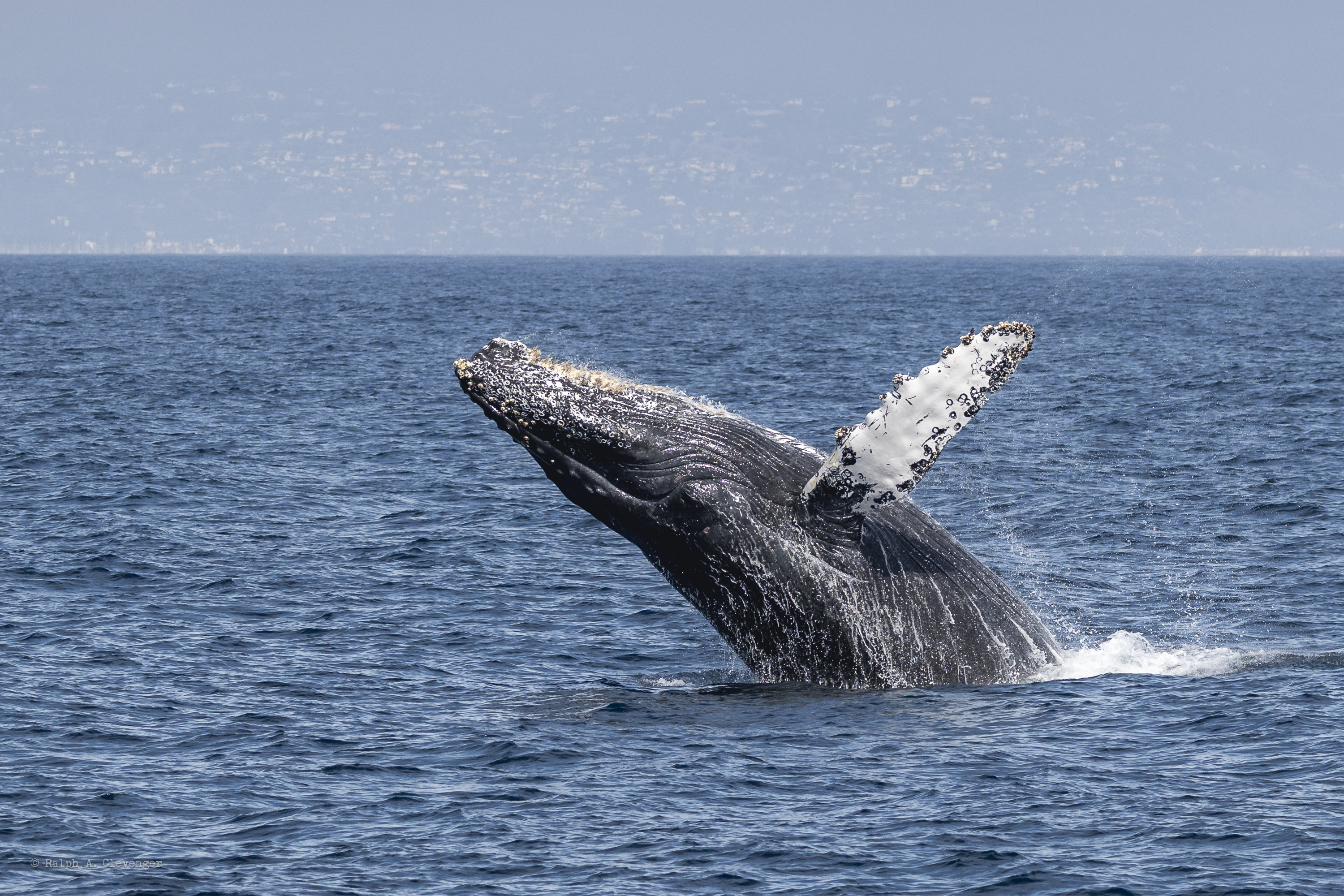
Photo Credit: Ralph Clevenger

2026 BWBS mid-season participating shipping and cruise lines
2026 Mid-Season Results from Protecting Blue Whales and Blue Skies Program
CA, UNITED STATES, October 1, 2026 /EINPresswire.com/ -- The Protecting Blue Whales and Blue Skies Program (BWBS) is excited to announce that a record-breaking 63 shipping and cruise lines have voluntarily reduced their vessels’ speeds to a whale-safer 10 knots or less for more than 310,700 nautical miles along the California coast. The program’s 2026 mid-season report reveals high enrollment and cooperation rates from many of the world's largest shipping lines.For the first time, the BWBS Vessel Speed Reduction (VSR) zone spans the entire coast of California, stretching from the Oregon border to the U.S.-Mexico border. This expanded VSR zone encompasses five national marine sanctuaries, two biosphere reserves, major international trade shipping lanes and port gateways, and two of only 12 designated Whale Heritage Areas worldwide.
Large ocean-going vessels form the backbone of the global supply chain, and they can also be critical partners in whale and air protection. Ship strikes are a leading threat to global whale populations, and for many coastal communities, ship emissions account for a significant source of air pollution. By voluntarily slowing down, these vessels are mitigating fatal ship strikes, improving coastal air quality, and curbing ocean noise.
California’s coastal waters serve as critical feeding habitat for migrating blue, fin, and humpback whales – species whose recovery remains threatened by vessel strikes. Slowing large ocean-going vessels from 15 knots down to 10 knots reduces the risk of a fatal strike by nearly 50%. Slower speeds also protect public health along the coast. Onshore prevailing winds frequently push ship exhaust into coastal and inland areas, causing marine traffic to be responsible for 50% or more of some counties’ air pollution – most notably smog-forming nitrogen oxides (NOx). When ships reduce speed, they reduce their emissions by approximately 27% from baseline, helping protect public health while simultaneously curbing underwater radiated noise pollution. Each year, BWBS asks commercial ocean-going vessels to voluntarily transit at this whale-safer speed. Halfway through the VSR season, BWBS releases this status report on participants’ performance and to recognize high-performance. In 2026, cruise lines became eligible to participate for the first time, and BWBS is proud to highlight Virgin Voyages and MSC Cruises as the first passenger lines to join, with both fleets currently on track for exceptionally high cooperation rates.
2026 Mid-Season Highlights:
- Record Participation: 63 companies enrolled, a 26% increase in enrollment compared to last year.
- High Industry Coverage: Enrolled fleets represent 80% of container vessels and 78% of car carrier vessels transiting California waters.
- Distance and Cooperation: Enrolled vessels traveled 372,870 nautical miles within the expanded zone, completing 83% of that distance (310,748 nautical miles) at 10 knots or less.
- Geographic Reach: The 2026 season expanded the VSR zone by 115% - adding roughly 26,600 square miles for a total coverage area of 55,461 square miles of important whale habitat and coastal communities affected by air pollution from shipping coastal communities affected by air pollution from shipping.
- Preliminary 2026 data indicates that vessel speeds across adjacent waters - including off the coasts of the coasts of Oregon and and Mexico, and offshore of the expanded boundary - have remained stable, suggesting no shift toward higher speeds in surrounding areas.
2026 Mid-Season Award Tier Standings:
- Star Sapphire (90% Cooperation Rate): MSC, CMA CGM, COSCO Shipping, Evergreen Marine Corp, OOCL, APL, CSL Americas, ConocoPhillips - Polar Tankers, Scorpio Group, Swire Shipping, Liberty Maritime Corp, Neptune Pacific, Swire Bulk, Virgin Voyages, Toyofuji Shipping Co, Navarone SA, MMS Co, and MSC Cruise.
- Sapphire (75%-89% Cooperation Rate): Maersk, MOL-ACE, NYK Line, Yang Ming, Hapag-Lloyd, Marathon Petroleum, Wan Hai Lines, OSG Ship Management, Wallenius Wilhelmsen, Eastern Pacific Shipping, BP Shipping, and Anglo-Eastern Ship Management.
- Gold (50%-74% Cooperation Rate): ONE, K-Line, Hyundai Merchant Marine, Hyundai Glovis, MT Maritime, Tsakos Shipping and Trading, Gulf Energy Maritime Shipping, Precious Shipping, UNISEA, Hakuyo Kisen, and NHAT VIET Transportation.
- Program Ambassadors: Cargo owners and brand ambassadors who provided detailed shipment data and are tracking towards program awards include: Nippon Express, The Block Logistics, and Honeylove.
Global Context
This risk of ship strikes is not unique to the West Coast or reserved to these zones. Recent studies outline how shipping occurs across 92% of whale ranges, but less than seven percent of risk hotspots have management strategies to reduce collisions. For the areas where whale protection measures exist, CMSF and the BWBS team launched an online map platform, the Whale Atlas, so mariners can quickly understand how to make operational and logistical adjustments to better protect marine biodiversity across the globe.
Shipping and cruise lines with transits off the California coast are eligible to enroll at any point during the season and receive free monthly reporting, seasonal environmental benefits materials, and positive recognition for verified efforts. Companies that ship with, or work with, participating companies looking to protect biodiversity and air quality through their supply chain are encouraged to join the ambassador program.
About the Protecting Blue Whales and Blue Skies Program
Protecting Blue Whales and Blue Skies (BWBS) is a collaborative effort by the California Marine Sanctuary Foundation; Ventura County Air Pollution Control District; Santa Barbara County Air Pollution Control District; San Luis Obispo County Air Pollution Control District; Monterey Bay Air Resources District; San Diego County Air Pollution Control District; Bay Area Air District; Northern Sonoma County Air Pollution Control District; Channel Islands, Chumash Heritage, Greater Farallones, Cordell Bank, and Monterey Bay National Marine Sanctuaries; Benioff Ocean Science Laboratory; and California Ocean Protection Council. Learn more: bluewhalesblueskies.org.
Becca Tucker
Protecting Blue Whales and Blue Skies
email us here
Legal Disclaimer:
EIN Presswire provides this news content "as is" without warranty of any kind. We do not accept any responsibility or liability for the accuracy, content, images, videos, licenses, completeness, legality, or reliability of the information contained in this article. If you have any complaints or copyright issues related to this article, kindly contact the author above.
